Elevate Idaho helps early-stage Innovators compete for federal research and development funds through the Small Business Innovation Research (SBIR) and Small Business Technology Transfer (STTR) programs – America’s Seed Fund – and connect to resources they need to take their venture to the next level of success!
Elevate Idaho is a unique partnership that consists of a strong statewide network of professional regional, state, university and federal mentors with expertise in the SBIR/STTR Grant Programs. This unique partnership provides a one-stop solution for Idaho startups and emerging companies working on technology innovations with commercial value.
Elevate Idaho offers free consultations, training, and proposal assistance to help Idaho Companies succeed in winning SBIR and STTR Grants, which in turn creates a solid foundation to build a robust SBIR/STTR Program across Idaho.
Through Elevate Idaho, SBIR/STTR Virtual Innovation Centers were created across the state to provide virtual training and educational workshops, virtual one-on-one consulting, virtual writing assistance, virtual proposal reviews, virtual assistance with strategic commercialization planning, and real-time collaboration between researchers, entrepreneurs, innovators, start-ups and tech-based economic development partners across Idaho. The Idaho SBIR/STTR Virtual Innovation Centers also provides the means for collaboration opportunities that would not otherwise have taken place, and most important, strengthen Idaho’s regional and statewide entrepreneurial and research ecosystem.
The SBIR and STTR Programs are non-dilutive funds dedicated to the research and development of new technologies with commercial value. Non-dilutive funds are funds that do not require a business to give up equity or ownership of their company. Whether you are a beginner, or a novice in the grant research and grant writing process, the Elevate Idaho Team is here to assist you every step of the way!
For more information contact: Teresa McKnight, CEO of REDI.
Elevate Idaho’s Success To-date
Elevate Idaho continues to surpass its objectives, closing out 2025 with 11 SBIR/STTR grants awarded and a total funding amount exceeding $10,300,000.
From 2020 through 2025, Elevate Idaho has played a pivotal role in increasing Idaho’s success, supporting 91 funded SBIR/STTR grants and securing more than $95 million in total funding. In comparison, before Elevate Idaho’s establishment, the state had only received 17 funded grants totaling $5.2 million between 2017 and 2019, ranking last among the Rocky Mountain states in SBIR/STTR performance.
If you’d like additional information about Elevate Idaho or are interested in collaborating with the Elevate Team, reach out to Teresa McKnight at tmcknight@rediconnects.org.
Services
Elevate Idaho’s services provide Idaho’s technology-oriented companies with a distinct advantage in today’s competitive environment. Services include:
- One-on-One Coaching – in support of proposal development, executive summary preparation, and proposal review for SBIR/STTR applicants. Based on opportunities and requirements of participating federal agencies, one-on-one coaching includes research of topics, review of the application process, and best practices to seek funding and awards.
- Federal Assistance & Introductions to Federal Program Managers – assistance to do business with the federal government through Sam.gov registration, Federal Agency support, connectivity to Federal Program Managers, and Federal Funding searches.
- Agency Training– based on particular nuances and requirements of participating agencies, including finding topics, the application process, and best practices to seek funding and awards.
- Training/Monthly Educational Workshops – Elevate Idaho HUB Team provides in-depth workshops highlighting specific agency instructions and guidance. Dates, topics, and speakers can be found on the Elevate Idaho webpage - https://www.rediconnects.org/elevate-idaho/
- Connectivity – small technology companies receive connections to business counseling, lab space, prototype creation, and other resources to build and grow their business. Also, connect and learn from SBIR/STTR Winners, Insiders, and additional resources.
- University and Idaho National Laboratory Technology Transfer – collaboration with Idaho's Universities and the Idaho National Laboratory Tech Deployment Office.
- Funding Network – small business connections to other sources of funding.
- Business and Industry – group collaboration to enhance opportunities and strengthen Idaho’s innovation ecosystem.
Elevate Idaho helps Idaho’s small technological businesses successfully win SBIR/STTR funding and commercialize life-changing technologies that impact our state and global economy.
Workshops
Interested in learning more about the SBIR and STTR Programs? We encourage you to attend one of the following Elevate Idaho Workshops in 2026. For more information, contact Abigail Murphy to register for the monthly SBIR/STTR workshops or to be added to e-distribution list.
Upcoming Workshop:
September 2, 2026
The workshop has been cancelled and will be rescheduled at a later date
| DATE | TIME | TOPIC | PRESENTER |
|---|---|---|---|
| 1/7/2026 | 12:00 p.m. (MST) | Understanding How to Register to do Business with the Government: The importance of Maintaining Current Registry Information & the Timing of Registration Requirements |
Bam Omotowa – APEX Sr. Business Consultant Mary Thompson – Counselor with Idaho APEX Accelerator |
| 1/21/2026 | 12:00 p.m. (MST) | Federal SBIR Program Manager presentations subject to reauthorization of SBIR/STTR Program | |
| 1/28/2026 | 12:00 p.m. (MST) | MASTER CLASS – Creating the advisory/advocacy board for commercialization NOTE: Attendance is by special invitation only for Idaho entrepreneurs who have, or are in the process, of submitting a Phase I or Phase II SBIR/STTR Grant proposal. |
|
| 2/4/2026 | 12:00 p.m. (MST) | Introduction to Elevate Idaho & SBIR/STTR Program: Purpose, eligibility, requirements, and which Federal Program should I pursue? |
Dave Noack – Regional Director, Eastern Idaho SBDC Bam Omotowa – APEX Sr. Business Consultant Teresa McKnight – REDI CEO |
| 2/11/2026 | 12:00 p.m. (MST) | MASTER CLASS – Crafting a Winning one sentence value proposition NOTE: Attendance is by special invitation only for Idaho entrepreneurs who have, or are in the process, of submitting a Phase I or Phase II SBIR/STTR Grant proposal. |
|
| 2/18/2026 | 12:00 p.m. (MST) | Federal SBIR Program Manager presentations subject to reauthorization of SBIR/STTR Program | |
| 3/4/2026 | 12:00 p.m. (MST) | How to Explore Federal Agencies Interests and Get to the “Why” to fund your Idea/Technology | Bam Omotowa – APEX Sr. Business Consultant Mary Thompson – Counselor with Idaho APEX Accelerator |
| 3/11/2026 | 12:00 p.m. (MST) | MASTER CLASS – The Art of a 30-Second Elevator Pitch NOTE: Attendance is by special invitation only for Idaho entrepreneurs who have, or are in the process, of submitting a Phase I or Phase II SBIR/STTR Grant proposal. |
|
| 4/1/2026 | 12:00 p.m. (MST) | 12-Week Planning Guide to Prepare Your SBIR/STTR Proposal | Dave Noack – Regional Director, Eastern Idaho SBDC Bam Omotowa – APEX Sr. Business Consultant Teresa McKnight – REDI CEO |
| 4/15/2026 | 12:00 p.m. (MST) | Energizing SBIR/STTR at the Department of Energy | Frank Salomone - Director of Small Business Research Grants, U.S. Department of Energy |
| 4/29/2026 | 12:00 p.m. (MST) | MASTER CLASS – What Problem Are You Trying to Address & What Opportunity is Associated w/Solving That Problem NOTE: Attendance is by special invitation only for Idaho entrepreneurs who have, or are in the process, of submitting a Phase I or Phase II SBIR/STTR Grant proposal. |
|
| 5/6/2026 |
Workshop canceled - Members of the Elevate Idaho Team will be presenting live on May 13th at the 2026 Idaho Rural Success Summit |
||
| 5/13/2026 |
Elevate Idaho & Elevate Idaho Success Stories - Live presentation by Teresa McKnight and Bam Omotowa at the 2026 Idaho Rural Success Summit |
Bam Omotowa – APEX Sr. Business Consultant Teresa McKnight – REDI CEO |
|
| 5/20/2026 | 12:00 p.m. (MST) | SJason Courtney - ERDCWERX Innovation Project Manager, U.S. Army Engineer Research and Development Center | Jason Courtney – ERDCWERX Innovation Project Manager, U.S. Army Engineer Research and Development Center |
|
6/10/2026 |
12:00 p.m. (MST) | The Importance of Developing a Commercialization Plan | Teresa McKnight – REDI CEO |
| 6/17/2026 | 12:00 p.m. (MST) |
Workshop rescheduled to October 21, 2026 - SBIR/STTR Program Director: Regina Sims - Department of Defense SBIR/STTR Program Office |
|
| 7/1/2026 | NO WORKSHOP SCHEDULED Due to Fourth of July Holiday |
||
| 7/15/2026 | 12:15 p.m. (MST) | National Institute of Standards and Technology (NIST) - Small Business Innovation Research (SBIR) Program Presentation |
Jacqueline Gray - Program Manager with the National Institute of Standards and Technology (NIST) SBIR Program Scott Dockum - Program Manager with the National Institute of Standards and Technology (NIST) SBIR Program Nicole Berry - SBIR Program Information Specialist in the Technology Partnerships Office (TPO) of the National Institute of Standards and Technology (NIST) |
| 8/5/2026 |
The August 5 Elevate Idaho workshop has been rescheduled to Wednesday, August 12 to allow participation in an NSF-hosted webinar. Note: Participants must register using the NSF link below. |
||
| 8/12/2026 |
The August 5 Elevate Idaho workshop has been rescheduled to Wednesday, August 12 to allow participation in an NSF-hosted webinar. Note: Participants must register using the NSF link below. |
||
| 8/19/2026 | 12:00 p.m. (MST) | Federal SBIR Program Manager presentations subject to reauthorization of SBIR/STTR Program | |
| 9/2/2026 | 12:00 p.m. (MST) |
The workshop has been cancelled and will be rescheduled at a later date |
|
| 9/16/2026 | 12:00 p.m. (MST) | Federal SBIR Program Manager presentations subject to reauthorization of SBIR/STTR Program | |
| 10/7/2026 | 12:00 p.m. (MST) | How to Track & Stay on Top of Approaching Deadlines | Teresa McKnight – REDI CEO |
| 10/21/2026 | 12:00 p.m. (MST) | SBIR/STTR Program Director: Regina Sims - Director, Department of War Office for Small Business Innovation | Regina Sims - Director, Department of War Office for Small Business Innovation |
| 11/4/2026 | 12:00 p.m. (MST) | How to Communicate Your Value Proposition & Develop Rapid Fire Pitches | Teresa McKnight – REDI CEO |
| 11/18/2026 | 12:00 p.m. (MST) | SBIR/STTR Program Director: Jennifer Thabet - Program Director, Small Business Programs Office (SBPO) at Defense Advanced Research Projects Agency (DARPA) | Jennifer Thabet - Program Director, Small Business Programs Office (SBPO) at Defense Advanced Research Projects Agency (DARPA) |
| 12/2/2026 | 12:00 p.m. (MST) | What is Intellectual Property & the Importance of Protecting Your IP | Bradley Frazer – Partner with Hawley Troxell and Chair of the firm’s Intellectual Property & Internet practice group |
| 12/16/2026 | 12:00 p.m. (MST) | Federal SBIR Program Manager presentations subject to reauthorization of SBIR/STTR Program |
*For more information about each workshop, click the title of the workshop to open a link the flyer.
Idaho's Successful SBIR/STTR Companies
Idaho Scientific LLChttps://www.idahoscientific.com/ https://www.sbir.gov/portfolio/682606 Idaho Scientific is a specialized embedded security firm with a proven track record of solving the hardest cybersecurity, supply chain integrity and anti-tamper problems with novel and scalable solutions. We have completed projects for national labs, federal research centers, the Pentagon and dozens of companies. The company licenses its technology to ensure systems are built upon a trusted and secure foundation. |
Lumineye Inc
https://www.sbir.gov/portfolio/1392083 Lumineye develops advanced through-wall radar technology that enhances safety and situational awareness for first responders, military personnel, and security teams. Its handheld sensors detect movement, breathing, and people through walls, providing critical insights before entering high-risk environments. The company has partnered with federal agencies and innovation accelerators to refine its technology and ensure it delivers reliable, mission-ready solutions. |
Solar Roadways Inc
https://www.sbir.gov/portfolio/355949 Solar Roadways designs modular, solar-powered panels that transform pavement into a clean energy source with integrated lighting, heating, and communication systems. Founded in Idaho, the company has completed federal research projects, secured SBIR funding, and launched pilot installations to demonstrate the potential of its technology. Solar Roadways continues to refine its panels and pursue partnerships to scale smart infrastructure solutions. |
Inergy Holdings LLC
https://www.sbir.gov/portfolio/1639695 Inergy (Inergytek) develops rugged, portable solar power solutions designed for extreme conditions and life-saving applications. Their systems—ranging from consumer-grade solar generators to the military-spec Flex Tactical Power Station—have been shaped by extensive R&D with the U.S. Air Force and Army. Inergy’s mission is to democratize clean, reliable energy while supporting disaster relief, off-grid living, and emergency preparedness, backed by award-winning innovation and federal contracts. |
Continuous Composites Inc
https://www.continuouscomposites.com/ https://www.sbir.gov/portfolio/797765 Continuous Composites pioneers Continuous Fiber 3D Printing (CF3D®), a unified platform that blends robotics, proprietary software, and rapid-curing resin-impregnated fibers to manufacture complex composite structures without molds or autoclaves. Based in Coeur d’Alene, Idaho, the company has secured major investments and development partnerships—including a joint commercialization agreement with Saint-Gobain—and is bringing its CF3D® systems to defense, aerospace, automotive, and energy sectors. Continuous Composites continues scaling through licensing and production activities aimed at transforming how mission-critical components are built. |
Gem State Informatics Inchttps://www.sbir.gov/portfolio/1830489 Gem State Informatics, Inc., founded in 2020 and based in Boise, Idaho, is a technology company specializing in advanced research and development of integrated computational storage and accelerated memory technologies. Operating as a stealth-mode startup, the company focuses on creating innovative data exploration solutions that improve performance, reduce energy consumption, and lower costs for data-intensive applications. Led by CEO Richard C. Murphy, Gem State Informatics has secured multiple SBIR Phase I and II contracts and holds a U.S. patent for its hybrid commodity computational storage devices, positioning the company as a leader in cutting-edge data and storage innovation. |
Natural Intelligence Systems Inchttps://www.naturalintelligence.ai/ https://www.sbir.gov/portfolio/1319641 Natural Intelligence is an Idaho-based technology company pioneering a neuromorphic machine learning platform that emulates the brain's pattern-based learning processes. Unlike traditional AI models reliant on complex mathematics, their system—known as the Natural Intelligence Machine Learning (NIML) platform—uses patterns to process data, enabling faster learning with smaller datasets and greater resilience to noise and missing information. Key features include unsupervised learning, incremental training, anomaly detection, and explainable AI, which provides clear insights into model predictions. This approach reduces the need for extensive data labeling and preprocessing, making it more efficient and accessible for data scientists. Headquartered in Meridian, Idaho, Natural Intelligence is led by CEO Paul Dlugosch and is committed to advancing AI that works more naturally, aligning with human cognitive processes. |
Advanced Ceramic Fibers LLC
https://www.sbir.gov/portfolio/403501 Advanced Ceramic Fibers LLC (ACF), founded in 2012 and based in Idaho Falls, Idaho, is a materials science company specializing in high-performance fibers for extreme environments. Building on research at Idaho National Laboratory, ACF developed the Direct Conversion Process™, creating Fi-Bar™ fibers—carbon fiber cores converted into metal carbide composites like silicon carbide, titanium carbide, and tantalum carbide. These fibers offer exceptional heat resistance, flexibility, near-diamond hardness, oxidation resistance, and electromagnetic shielding, making them ideal for applications in turbine engines, nuclear propulsion, space exploration, and advanced armor. The company has secured over $5 million in federal contracts from agencies including the Department of Defense, NASA, and the Department of Energy, and continues to pursue strategic partnerships to commercialize its transformative materials. |
Caring Technologies Inc
https://www.sbir.gov/portfolio/389401 Behavior Imaging®, formerly Caring Technologies, Inc., develops solutions to facilitate the observational, analytical and collaborative needs of behavioral healthcare and special education professionals. Behavior Imaging® enables collaboration and consultation between patients and professionals through video capture and a secure health record application that allows users to store, share, and annotate video files. The company’s clients include the Department of Defense, State Departments of Education, behavioral health service providers, and many leading universities. |
GroGuru Inc
https://www.sbir.gov/portfolio/1906139 GroGuru is focused on helping farmers implement strategic water management for the smart farm. We deploy soil sensors that measure things like soil moisture, temperature and salinity at various root depth of crops. We wirelessly transmit this data to the Cloud where we add additional information to make AI-based recommendations to farmers about when and how much to irrigate their crops. Our recommendation engine accounts for the data we get from the soil sensors, but also crop type, weather, soil type and additional data. |
Legov Systems Group LLC
https://legovsystemsgroup.com/ https://www.sbir.gov/portfolio/1521431 With over 60 years combined industry experience in the fields of acoustics, vibrations, data acquisition, signal processing, mechatronics, robotics, controls, smart materials and overall product engineering, this team has the ability to solve challenging problems by using smart materials for solutions and technology advancement. Our principals hold degrees in Electrical Engineering, Mechanical Engineering and Aerospace Engineering as well as advanced degrees in Mechanical Engineering and Engineering Mechanics. If you have a challenging engineering problem that needs a unique solution, contact us to learn how we can help you. |
Sentient Science Corporation
https://www.sbir.gov/portfolio/305000 Sentient Science is a leading innovator in predictive asset performance and lifecycle management. Their flagship platform, DigitalClone®, integrates AI, physics, and materials science to model and forecast the degradation and failure of mechanical systems. This enables organizations to transition from reactive maintenance to proactive, data-driven decision-making. |






WHAT ARE THE SBIR AND STTR PROGRAMS?
SBIR (Small Business Innovation Research) and STTR (Small Business Technology Transfer) grants fund small businesses research and development (R&D) projects. Every year, the federal government sets aside $4 billion to help small businesses minimize risk so innovative technology moves to commercialization.
There are eleven federal agencies that participate under the SBIR program, five of which also participate in the STTR program. Both programs are congressionally mandated programs. These non-equity dollars are set aside to assist in moving forward a company’s research and development efforts. Because they are non-dilutive federal dollars, there is no loss of equity or ownership, and no payback of funds required.
HOW MUCH FUNDING IS AVAILABLE AND WHAT CAN IT BE USED FOR?
There is approximately $3.6 billion dollars available under eleven federal agencies to fund small business research and development through the SBIR and STTR programs. These dollars are offered in competitive phases:
- Phase I typically offers $150,000 to $225,000 for a six-month project to prove the feasibility and technical merit of your idea or technology.
- Phase II typically offers $1 million to $1.5 million for a 24-month project and is meant to expand the Phase I results and evaluate commercial potential.
- Phase III takes place as the technology moves from the laboratory to the marketplace. While SBIR and STTR funds do not support this phase, some agencies offer sole-source contracts or follow-on non-SBIR funded research and development to help small businesses commercialize a product.
SBIR/STTR funds can be used for:
- Salaries and fringe benefits
- Overhead costs
- Materials and Supplies
- Consultants
- Subcontractors
SBIR/STTR funds cannot be used for:
- Attorney fees and Patent Costs
- Marketing
- Brick and mortar
- Setting up a lab
However, a reasonable fee or profit of up to 7% can be included in the budget. These funds can be used at the discretion of the small business in any category.
WHO IS ELEIGIBLE FOR SBIR AND STTR FUNDING?
All companies that possess an Idaho business license and are eligible for the federal SBIR/STTR program. Individuals can contact the Idaho SBIR/STTR Virtual Innovation Center Team to learn more.
The company must meet the following federal requirements:
- For-profit company
- American-owned
- At least 51% owned by individual(s)
- Have 500 or fewer employees (determined by NAICS code)
HOW DO I APPLY FOR SBIR AND STTR FUNDING?
To apply for SBIR or STTR funding, you may:
- Contact the Idaho SBIR/STTR Virtual Innovation Center Team. The Team will get acquainted with your company and your project. They will help assess your technology and provide feedback in regard to how well you fit within the SBIR/STTR programs and identify any gaps found during the assessment.
- We encourage interested companies to begin the process early to register their business through the federal registration process. Please contact the Idaho APEX Office to assist you with registration.
- In addition, we encourage you to search for an agency and topic that meets the needs of your technology and aligns with your business strategy. If you are not sure, one of the Idaho SBIR/STTR Virtual Innovation Center Team members can help you with this process.
- It is important, once you identify the agency and topic, you read through the solicitation process and begin drafting an outline of your plan for your Phase I.
- At any time, you can contact the representative of the selected federal agency and solicit a topic by email to request a meeting by phone to discuss your plan.
- After you meet with the representative of the selected federal agency, and you decide you want to pursue a SBIR or STTR grant, you will work with the Idaho SBIR/STTR Virtual Innovation Center Team to draft your proposal.
- We encourage you to work with the Idaho SBIR/STTR Virtual Innovation Center Team to assure your proposal is strong, your budgets complete, and any additional required documents have been completed.
- Once the above is completed, you can begin to finalize all documents and organize the documents in a packet for submission.
The information outlined is a brief overview to guide you through the process. Please do not hesitate to contact the Idaho SBIR/STTR Virtual Innovation Center Team if you have questions or require assistance. Additionally, we encourage you to participate in our Workshop sessions to learn more about the program, the process, and the tools to develop and move your application forward.
WHAT SERVICES DOES THE IDAHO SBIR/STTR VIRTUAL INNOVATION CENTER OFFER?
We offer a full range of services to small businesses interested in SBIR and STTR funding. Services include:
- Consultations
- Training through Workshops
- Proposal guidance and evaluation
- Grant Writing Assistance Services (provided by the Idaho State University Commercialization Center)
- Review and editing
- Submission assistance
IS THERE A COST ASSOCIATED FOR THESE SERVICES?
- There is no cost for the services outlined.
- If you participate in the SBIR/STTR Road Tour, there may be a nominal cost for additional workshops and seminars for this once-a-year opportunity.
WHAT IS THE SBIR ROAD TOUR AND WHEN IS IT HELD?
The SBIR Road Tour is a national outreach effort connecting entrepreneurs working on advanced technologies directly to Federal agencies and the resources they have to support technology commercialization. Since its inception in 2015, the SBIR Road Tour has visited every state and Puerto Rico. These stops have brought together local innovation ecosystems around the country and connected entrepreneurs to additional resources to help their small businesses start and grow.
In the past, the yearly SBIR Road Tour has been held in Idaho Falls and Boise. Due to COVID, the 2020 Road Tour was held virtually. The 2021 Road Tour will be a national virtual tour. For more information on the Idaho SBIR Road Tour, please click on the following link: SBIR Road Tour – Seeding America's Future Innovations.
WHAT FEDERAL AGENCIES PARTICIPATE?
Agencies are mandated by Congress to participate in the SBIR program when their extramural research budget is greater than $100 million and under the STTR program when it is over $1 billion. Currently, 11 agencies participate in the SBIR program, of which, five also participate in the STTR program. A list of Agencies can be found by clicking the following link - SBIR-STTR Agency Contacts. You will also find a list below:
- Department of Agriculture (USDA)
- Department of Commerce (National Institute of Standards and Technology/NIST)
- Department of Commerce (National Oceanic and Atmospheric Administration/NOAA)
- Department of Defense (DoD)
- Department of Education (DoED)
- Department of Energy (DOE)
- Department of Health and Human Services (DHHS)
- Department of Homeland Security (DHS)
- Department of Transportation (DOT)
- Environmental Protection Agency (EPA)
- National Aeronautics and Space Administration (NASA)
- National Science Foundation (NSF)
For links and guidance on SBIR and STTR funding you can go to: SBIR.gov or any of the individual agencies listed above. There are more than 7,000 possibilities or combinations for federal funding under the SBIR/STTR programs.
You can also search for open topics at: Open Topic Search
WHAT DOES A COMPANY APPLYING FOR SBIR/STTR FUNDING GIVE UP?
Nothing! There is no loss of technology ownership, no loss of intellectual property, and no payback of funds. There is a clause in the award language, however, authorizing the federal government to license the technology in a national emergency. Which has rarely ever happened.
The Idaho SBIR/STTR Virtual Innovation Center offers the following:
- Free monthly SBIR/STTR workshops on the second Wednesday of each month. Monthly workshops are scheduled at 12:00/noon. Pre-registration is required. It’s a great first step to learn more about the SBIR/STTR programs and meet our team members.
- Call or email the Idaho SBIR/STTR Virtual Innovation Center Team to schedule a free consultation.
News and Announcements
NSF plan to slash ‘indirect’ science funding: will it stick?
As it awaits a court ruling, the US National Science Foundation has paused its attempt to cap indirect-cost payments on research grants.
By Dan Garisto
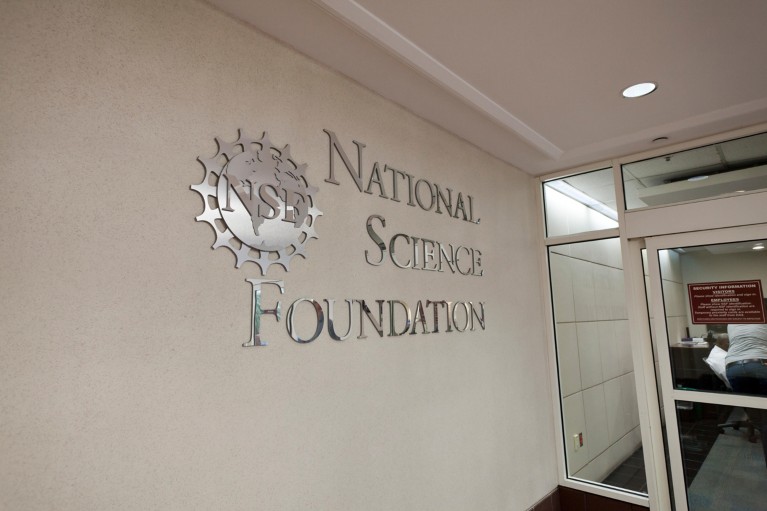
The National Science Foundation has suspended its plans to set a blanket rate for all overhead-cost funding on research grants.Credit: B Christopher/Alamy
The US National Science Foundation (NSF) has paused a policy that threatened to cost universities hundreds of millions of dollars a year in ‘research overhead’ payments. The suspension, announced last Friday, follows freezes of similar policies at the US National Institutes of Health (NIH) and the US Department of Energy (DoE).
The NSF announced on 2 May that it would cap overhead payments on new research grants at 15% and was swiftly sued by a coalition of 13 US universities and 3 academic associations seeking to stop the policy. The newly announced pause will last until 13 June, when a judge will hear the case. The decision allows the agency to skip a preliminary hearing.
Since US President Donald Trump took office in January, the NIH, NSF and DoE have all announced that they would cap overhead payments. Groups of academic organizations also sued the NIH and DoE; judges have blocked both agencies from implementing their caps.
Universities argue that the caps are not only illegal, but also devastating to science. The NSF’s cap would threaten the country’s “status as a global leader in scientific research and innovation”, the plaintiffs say.
A spokesperson for the NSF declined to comment on the lawsuit, but acknowledged that the agency has paused the cap.
Here, Nature looks at what’s at stake and whether the administration is likely to prevail.
What are overhead costs?
Research grants pay for staff salaries and new laboratory equipment — the direct costs of doing science. But agencies such as the NSF and NIH also fund overhead, or indirect costs, including the electricity consumed by research facilities, information-technology support and more.
In 1965, Congress mandated that universities negotiate their overhead rate with either the US Department of Health and Human Services (HHS) or the US Office of Naval Research (ONR). Each university’s rate typically applies to all federal grants it receives.
University rates generally range from 40% to 70% and depend mainly on the institution’s location and the type of research being supported. For a university with a 50% indirect cost rate, for example, a US$100,000 NIH grant would provide $50,000 in further funding for indirect costs.
Where does the 15% number come from?
The NSF did not provide a rationale. Some wealthy private foundations provide an overhead rate of 15%, but say that they pay lower indirect rates than the government does because they expect the government to support overheads. Some foundations, such as the Gates Foundation in Seattle, Washington, often consider overheads to be part of direct costs.
Why did the NSF cap indirect costs?
On its website, the NSF justifies the policy by saying it will force universities to reduce overhead costs, thereby improving efficiency. The agency also argues that the change would increase its own efficiency “by eliminating the need for individualized indirect cost negotiations” and its own effectiveness by devoting more funds to direct research costs.
The latter argument about effectiveness is “not plausible”, says John Walsh, a science-policy researcher at the Georgia Institute of Technology in Atlanta, because any increase of direct expenditures creates more indirect costs. He likens it to a chicken franchise trying to cook twice as much chicken. “You’d need a second fryer,” he says.
Current and Future Solicitations
Stay updated on current and future solicitation openings.
View links to each of the SBIR/STTR participating agencies.
*Please check each Federal agencies webpage for additional funding solutions.
SBIR/STTR Funding Opportunities
New NSF funding opportunities support AI-enabled scientific discoveryThe U.S. National Science Foundation is encouraging the research community to apply to two new programs designed to expand the infrastructure and data resources needed for artificial intelligence-enabled discovery. The NSF State and Regional Artificial Intelligence Infrastructure Hubs program will invest up to $100 million to establish as many as 10 state and multistate regional hubs. The hubs will expand access to computing, data and other AI resources; strengthen regional partnerships among research institutions, industry, philanthropy and state and local governments; and develop the technical workforce needed to support AI-enabled research and education. Importantly, only one award will be made in each state or region. The NSF Unlocking Dataset Value for AI-Enabled Scientific Discovery program will invest up to $100 million to help research communities increase the value of existing scientific datasets. The program seeks to 1) apply AI-based capabilities to feature extraction and metadata generation, and the integration of multiple datasets. 2) Develop robust data pipelines necessary for automated analysis of existing datasets and similar use-cases by AI tools and systems. 3) Augment and/or harmonize existing datasets to better enable use by AI data pipelines and automated analysis. Together, these opportunities will help researchers access advanced computing resources, prepare scientific data for AI use and build the partnerships and workforce capabilities needed to advance AI-enabled discovery. Researchers and eligible organizations are encouraged to review the solicitations and consider applying.
|
|
Department of War (DoW) Funding Opportunities
To search, filter, and view topics under active DoW SBIR/STTR BAA fiscal year (FY) 2026 solicitations, visit: Topics and Topic Search (SITIS)
|
| National Institutes of Health (NIH) Seed Fund | Funding Opportunities NIH Seed SBIR and STTR funding opportunities offer small business entrepreneurs a chance to obtain non-dilutive funding for early-stage research and development. Standard application due dates are September 5, January 5, and April 5. Due dates that fall on weekends or Federal holidays are moved to the next business day. |
| Advanced Research Projects Agency for Health (ARPA-H) | Open Topic Solicitation ARPA-H supports small businesses by providing funding opportunities for innovative health research and development projects. Solution summaries are due July 17. |
| National Aeronautics and Space Administration (NASA) SBIR/STTR Program | Civilian Commercialization Readiness Pilot Program (CCRPP) | Call for Applications The NASA CCRPP is a post-phase II opportunity focused on commercialization impact as well as NASA mission infusion. Response date is August 19. |
| National Science Foundation (NSF) | Solicitations NSF invests in scientific discoveries, technological breakthroughs, and transformative innovations that strengthen economic growth, enhance security, and improve the lives of Americans and people around the world. There are Phase I, Phase II, and Fast-Track Programs (SBIR/STTR) as well as the new pilot emphasis on scientific instrumentation. Full proposal deadlines are July 27. |
| U.S. Department of Agriculture (USDA) | Stay tuned. USDA offers competitively awarded grants to support high-quality research related to important scientific problems and opportunities in agriculture that could lead to significant public benefits. Dates are estimates and are subject to change. The first Notice of Funding Opportunity a small business can expect to see will be Phase II, with an estimated summer publication. Second, the Phase I Notice of Funding Opportunity is estimated to be published in the fall. |
| Department of Energy (DOE) | Forecasted Opportunities DOE has several planned SBIR/STTR announcements for 2026, including: an opening for applications to Phase II topics; an opening for applications to some Phase I topics; and an opening for applications to additional Phase I topics. |
|
Pathways to Enable Secure Open-Source Ecosystems (PESOSE) The Pathways to Enable Secure Open-Source Ecosystems (PESOSE) program supports the translation of open-source science and engineering-focused research products into safe and sustainable ecosystems that address national and societal challenges. Open-source tools such as software, hardware, machine learning models, languages, and data platforms are designed to be shared as they are publicly-accessible and modifiable. These tools spark innovation in critical fields as varied as artificial intelligence (AI) and cloud computing, banking, healthcare, research, education, next-gen manufacturing, mobility, and National security (including cybersecurity). PESOSE supports the creation of managing organizations for these ecosystems, ensuring strong governance, distributed development, and broad user communities across academia, industry, and government. PESOSE also supports enhancements to the safety, security, and privacy of Open-Source Ecosystems (OSE) by addressing significant vulnerabilities, both technical and socio-technical, to improve the resistance of the ecosystem against threats. This solicitation seeks three types of proposals, allowing teams to propose specific activities to: 1) scope and plan the establishment of an OSE, 2) establish and expand a sustainable OSE based on a robust, promising open-source product that meets an emergent societal or national need, and 3) improve the safety, security, and privacy of an existing OSE and its products. Upcoming due datesFull proposal
2026
September 1 2026 - Deadline date
First Tuesday in September, Annually Thereafter
2027
March 2 2027 - Deadline date
First Tuesday in March, Annually Thereafter
Due by 5pm submitting organization's local time More information here. |
|
Small Business Innovation Research (SBIR) / Small Business Technology Transfer (STTR) Programs The SBIR and STTR programs, administered by the National Science Foundation (NSF), provide funding to support small businesses in conducting research and development with strong potential for commercialization. These programs aim to foster innovation, encourage partnerships between small businesses and research institutions, and strengthen the role of small businesses in advancing technology and economic growth. SBIR focuses on enabling small businesses to lead research and development efforts, while STTR requires formal collaboration between small businesses and nonprofit research institutions such as universities. Funding is provided in phases, beginning with feasibility and proof-of-concept work, followed by continued development toward commercialization. A wide range of technology areas are supported, including advanced manufacturing, artificial intelligence, biotechnology, environmental technologies, and more. These programs are highly competitive and are designed to help bring high-impact innovations to market. Closing Date: Varies by solicitation cycle Upcoming due datesFull proposal
2026
July 27 2026 - Deadline date
November 4 2026 - Deadline date (First Wednesday in November, Annually Thereafter)
2027
March 4 2027 - Deadline date
First Thursday in March, Annually Thereafter
July 7 2027 - Deadline date
First Wednesday in July, Annually Thereafter
Due by 5pm submitting organization's local time More information here. |
|
Department of War (DoW) Funding OpportunitiesDoW uses the Broad Agency Announcement (BAA) funding mechanism to procure basic and applied research via issuing topics for scientific study and experimentation, which are directed towards advancing the state-of-the-art, increasing knowledge, or understanding, instead of focusing on, a specific system or hardware solution.
To search, filter, and view topics under active DoW SBIR/STTR BAA fiscal year (FY) 2026 solicitations, visit: Topics and Topic Search (SITIS)
|
|
Department of Education (ED) Institute of Education Sciences (IES) | Fiscal Year 2026 SBIR Program Solicitation InformationED/IES provides up to $1.25M in funding in two phases: Phase I ($250,000 for 9 months) for rapid prototype development and evaluation of new education technology prototypes and Phase II ($1,000,000 for 2 years) for the full-scale development and evaluation of new education technology products.
|
|
National Institutes of Health (NIH) Seed Fund | SBIR/STTR Notices of Funding Opportunity (NOFOs)NIH Seed Fund published NOFOs for eligible U.S. small businesses ready to advance innovative biomedical technologies toward public health impact. Applicants are encouraged to review the NOFOs and get organized for the receipt date of September 8. |
|
Advanced Research Projects Agency for Health (ARPA-H) | Open Topic Solicitation |
|
U.S. Department of Transportation (DOT) FY 2026 | Phase I SolicitationDOT’s SBIR program awards contracts to pursue research on and develop innovative solutions to our nation’s transportation challenges. DOT SBIR's fiscal year (FY) 2026 Phase I solicitation opened on June 3.
|
|
National Science Foundation (NSF) | Solicitations |
|
The National Science Foundation just relaunched its SBIR/STTR programs with $250M for the nation's startups and small businesses. This is non-dilutive funding designed for companies translating deep-tech research into commercially viable products with real economic and security impact.
|
|
Department of War (DoW) Funding OpportunitiesDoW uses the Broad Agency Announcement (BAA) funding mechanism to procure basic and applied research via issuing topics for scientific study and experimentation, which are directed towards advancing the state-of-the-art, increasing knowledge, or understanding, instead of focusing on, a specific system or hardware solution.
To search, filter, and view topics under active DoW SBIR/STTR BAA fiscal year (FY) 2026 solicitations, visit: Topics and Topic Search (SITIS)
|
|
U.S. Department of Transportation (DOT) Fiscal Year 2026 | Phase I Solicitation
|
|
U.S. Department of Agriculture (USDA) Notice of Funding Opportunity (NOFO) | Stay tuned. USDA offers competitively awarded grants to support high-quality research related to important scientific problems and opportunities in agriculture that could lead to significant public benefits. Dates are estimates and are subject to change.
|
|
National Institutes of Health (NIH) SEED Fund | Forecasted Opportunities NIH’s Seed Fund is a cornerstone of biomedical entrepreneurship, powering breakthrough science, building game-changing technologies, and moving solutions toward real-world impact. The forecasted Notices of Funding Opportunities (NOFOs) are intended to help researchers prepare for potential funding opportunities, but they are informational only. |
|
U.S. Department of Transportation (DOT) FY 2026 Phase I Solicitation Release | Stay tuned. DOT’s SBIR program awards contracts to pursue research on and develop innovative solutions to our nation’s transportation challenges. DOT SBIR plans to release its fiscal year (FY) 2026 Phase I solicitation soon. Dates are estimates and subject to change.
|
| U.S. National Science Foundation Translation to Practice (NSF TTP) Collaborates with U.S. Army Combat Capabilities Development Command Ground Vehicle Systems Center (DEVCOM GVSC)
The U.S. National Science Foundation and the U.S. Army Combat Capabilities Development Command Ground Vehicle Systems Center (DEVCOM GVSC) have partnered to issue a Dear Colleague Letter (DCL) seeking proposals to advance cutting-edge scientific discovery, provide technological innovation and transition knowledge products to empower U.S. Army capabilities. Proposers should tailor their use-inspired research and translation projects towards national security and/or national defense. This DCL specifically seeks projects that are aligned with six core competencies: survivability and protection; robotics and autonomy; power and mobility; additive manufacturing; fuel and lubricants; and modeling, simulation and software development. In addition, projects should deliver on DEVCOM GVSC research initiatives and work toward developing, integrating, enhancing and sustaining DEVCOM GVSC capabilities to support U.S. Army modernization priorities and improve readiness. "We look forward to supporting the U.S. Army and providing pathways to innovation to secure our nation's defense," said Erwin Gianchandani, NSF assistant director for Technology, Innovation and Partnerships. "This opportunity underscores how essential science and technology advancements are to our nation, not only for global competitiveness but for national security as well." The DEVCOM GVSC funding opportunity is offered through the NSF Directorate for Technology, Innovation and Partnerships, which recently launched the new Translation to Practice (NSF TTP) program. Projects should:
"Through this collaboration with NSF, we are building a pathway to accelerate the maturation and transition of innovative fundamental research that shortens technology development timelines and delivers critical capabilities to the soldier faster," said David Gorsich, chief scientist for U.S. Army DEVCOM GVSC. The NSF TTP program will consider proposals that are responsive to the core competencies and interests of the DEVCOM GVSC across all three tracks of the NSF TTP program solicitation. To learn more about this funding opportunity, view the full DCL. |
| U.S. National Science Foundation Translation to Practice (NSF TTP) Collaborates with Naval Surface Warfare Center, Dahlgren Division (NSWCDD)
The U.S. National Science Foundation, in partnership with the U.S. Naval Surface Warfare Center, Dahlgren Division (NSWCDD), has issued a Dear Colleague Letter (DCL) seeking proposals to advance a broad research, development, test and evaluation portfolio with an emphasis on warfare systems development and integration. The funding opportunity is offered through the new Translation to Practice (NSF TTP) program, led by the NSF Directorate for Technology, Innovation and Partnerships (NSF TIP). The NSF TTP program aims to invest in use-inspired research, translational activities and partnerships that turn scientific discoveries into real-world solutions. Researchers can participate in a wide range of translational activities, including but not limited to preparing and testing prototypes, protecting intellectual property, launching commercial activities, participating in open-source ecosystems, developing research standards, forming partnerships, and/or facilitating licensing and/or industry adoption. "Together, NSF and the U.S. Navy are working to advance national security research and strengthen our national defense," said Erwin Gianchandani, NSF assistant director for NSF TIP. "At the core of that work is accelerating the critical research and ideas that can help keep our country safe, secure and globally competitive." The DCL requests that submitted proposals should align with NSWCDD research initiatives and work towards developing, testing, evaluating, integrating, enhancing and/or sustaining complex naval warfare systems, including:
Additionally, the TTP program will consider proposals that are responsive to the core competencies and interests of NSWCDD across all three tracks of the program solicitation. The three TTP program tracks are:
To learn more about this funding opportunity, view the full DCL. |
| Agriculture and Food Research Initiative - Foundational and Applied Science Program
The AFRI Foundational and Applied Science Program supports grants in six AFRI priority areas to advance knowledge in both fundamental and applied sciences important to agriculture. The six priority areas are: Plant Health and Production and Plant Products; Animal Health and Production and Animal Products; Food Safety, Nutrition, and Health; Bioenergy, Natural Resources, and Environment; Agriculture Systems and Technology; and Agriculture Economics and Rural Communities. Research-only, extension-only, and integrated research, education and/or extension projects are solicited in this Request for Applications (RFA). See Foundational and Applied Science RFA for specific detail. Posted Date: Friday, August 1, 2025
Closing Date: Thursday, December 31, 2026
|
|
Department of Defense (DoD) Funding Opportunities DoD uses the Broad Agency Announcement (BAA) funding mechanism to procure basic and applied research via issuing topics for scientific study and experimentation, which are directed towards advancing the state-of-the-art, increasing knowledge, or understanding, instead of focusing on a specific system or hardware solution. To search, filter, and view topics under active or archived DoD SBIR/STTR solicitations, visit: https://www.dodsbirsttr.mil/topics-app/. |
|
Department of Defense (DoD) Funding Opportunities
|
|
|
The NIH Guide for Grants and Contracts is NIH’s official publication of notices of grant policies, guidelines, and funding opportunities. NIH publishes a daily and issues a Weekly Table of Contents. View Active Opportunities and generic parent announcements for investigator-initiated research. |
|
Department of Defense, Army, DLA, DMEA, and DARPA | SBIR 2025.4 Opportunities Now Open These programs are Congressionally-mandated set-asides to encourage domestic small businesses’ engagement in research and development, scientific excellence, and technological innovation through federal research fund investment in critical American priorities to build a strong national economy and accelerate Warfighter capabilities. FY 2026 DoD SBIR/STTR Solicitation Schedule/Dates here. |
|
The Defense Small Business Innovation Research (SBIR) and Small Business Technology Transfer (STTR) Program’s objectives include stimulating technological innovation, strengthening the role of small business to meet DoD research and development (R&D) needs, fostering and encouraging minority and disadvantaged persons’ participation in technological innovation, and increasing the commercial application of DoD-supported research or R&D results. FY 2026 DoD SBIR/STTR Solicitation Schedule/Dates here. |
|
Defense SBIR/STTR Program Launches New, Revised Solicitation Schedule This fall, the Defense SBIR/STTR Program Office launched a new, revised Fiscal Year (FY) 2026 solicitation schedule. Since October, DoD SBIR/STTR solicitations release the first Wednesday of each month. We invite small businesses to visit the Defense SBIR/STTR Innovation Portal (DSIP) www.dodsbirsttr.mil for topic releases. The revised schedule provides small businesses with additional funding opportunities on a predictable schedule. For Services and Components, the schedule provides a manageable, repeatable process. Additional highlights include:
Below is the new FY26 schedule with sample Pre-release, Open and Close dates. Be sure to frequently check DSIP, our website, www.defensesbirsttr.mil, and our social media pages for any updates or changes: LinkedIn, www.linkedin.com/company/dodsbirsttr; Instagram, @dodsbir; X (Twitter), @dodsbir and Facebook, @dodsbir |
|
DoD SBIR 2024.4; STTR 2024.D Phase I and Direct-to-Phase II
Topics: Several Open and Specific Topics from Army, Navy, DARPA
Pre-Release: Topic-dependent
Open: Topic-dependent
Submission Deadline: Topic-dependent
|
|
Topics: Several Open and Specific Topics from Army, Navy, DARPA
Pre-Release: Topic-dependent
Open: Topic-dependent
Submission Deadline: Topic-dependent
|
*How to apply - Apply | SBIR
Additional Resources
- About the SBIR/STTR Programs - https://www.sbir.gov/about
- Getting started – https://www.sbir.gov/applicant
- Federal Agency Representatives – https://www.sbir.gov/agency-representative
- SBIR/STTR Topic Areas – https://www.sbir.gov/sbirsearch/topic/current
- SBIR/STTR Solicitations – https://www.sbir.gov/solicitations
- SBIR Announcements – https://www.sbir.gov/announcements
- SBIR Resources – https://www.sbir.gov/resources
- Air Force SBIR/STTR Resources – https://www.afsbirsttr.af.mil
- Patent process overview - www.uspto.gov/patents/basics/patent-process-overview#step1
- SBIR Self-Assessment - Self Assessment PDF
- 5 Grant Submission Mistakes You Can't Afford to Make (and How to Avoid Them) - https://grantengine.com/5-grant-submission-mistakes-you-cant-afford-to-make-and-how-to-avoid-them/
- Developing A Commercialization Strategy - https://strategycapstone.org/commercialization-strategy/
- Government Proposal Writing Guide - https://bureauify.com/guide/proposal-writing
- Federal Sites Smart GovCons Use to Win More Contracts - https://www.linkedin.com/posts/saj754_govcon-governmentcontracting-federalcontracts-activity-7463260417708949504-kvQ4/
- How to choose the right investor for your startup - https://www.linkedin.com/posts/activity-7372622786151923713-8x7k/
- The 12 P's for Successful Grant Applications - PDF
- 15 Key Questions Venture Capitalists Ask Before Investing in Your Startup - PDF
U.S. Department of Energy Office of Technology Commercialization
The U.S. Department of Energy Office of Technology Commercialization works to accelerate the commercialization of energy technologies developed through national labs, universities, and private sector partnerships. Their programs support innovators in bringing cutting-edge solutions to market, strengthening U.S. competitiveness and advancing energy security.
Learn more about available programs, funding opportunities, and resources by visiting the official website: https://www.energy.gov/technologycommercialization/office-technology-commercialization
DOE Small Business Innovation Research (SBIR) and Small Business Technology Transfer (STTR) Programs
The U.S. Department of Energy SBIR and STTR programs provide funding and support to small businesses developing innovative technologies that align with national energy priorities. These programs help bridge the gap between early-stage research and commercialization, enabling startups to advance high-impact solutions and compete in the marketplace.
Learn more about eligibility, funding opportunities, and how to apply by visiting the official webpage: DOE SBIR/STTR Programs
Contact Us
The Elevate Idaho SBIR/STTR Virtual Innovation Center Satellite Offices are strategically located across the State of Idaho. Partners include:
- Boise State University Technology Transfer Office – Brett Adkins
- Hawley Troxell - Brad Frazer
- Idaho Commerce – Tracy Day
- Idaho State University Office for Research – Marty Blair or Steve Wright
- University of Idaho Technology Transfer Office - Arch Harner